

Background
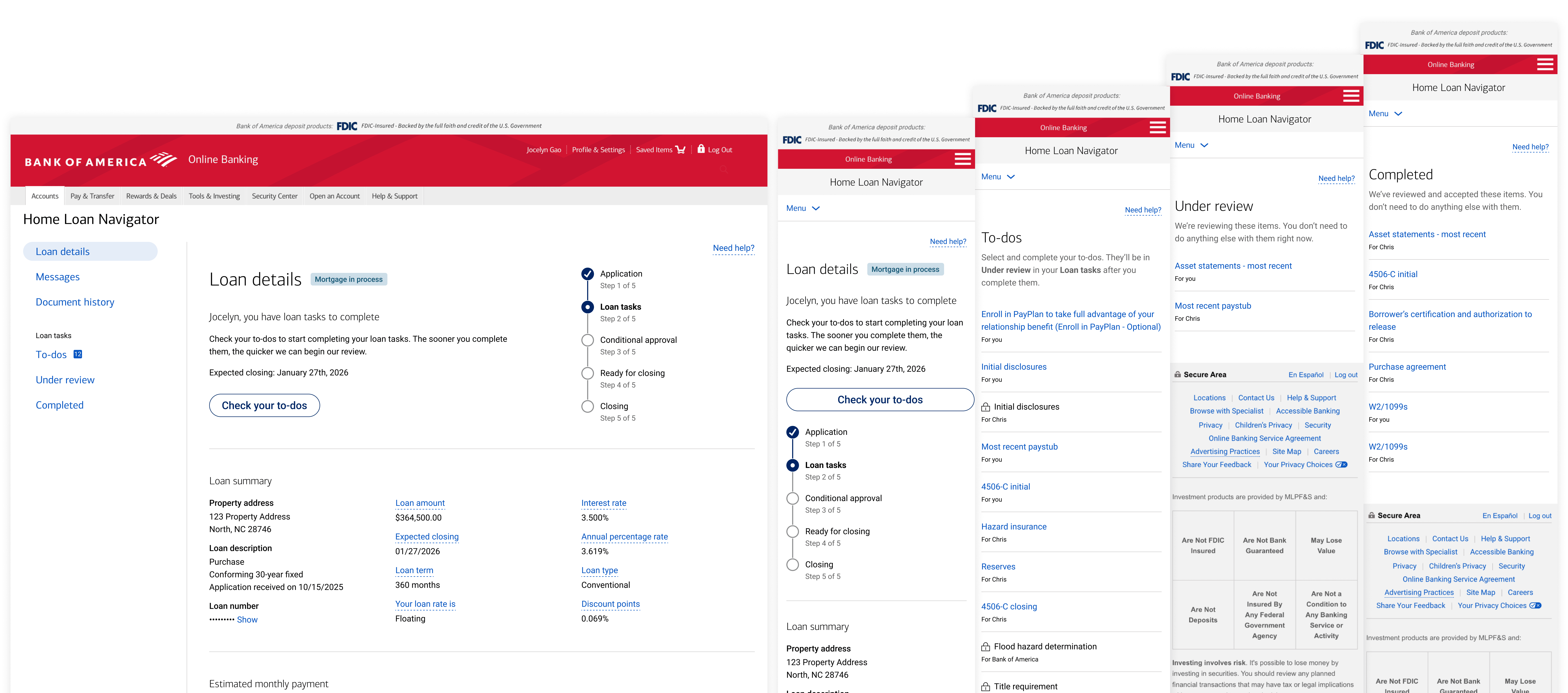
Home Loan Navigator® (HLN) is Bank of America’s digital tool that helps clients track their mortgage application and complete underwriting tasks, such as eSigning and document uploads, on their path to closing.
Problem
Clients lacked clear visibility into where they were in the mortgage process or what to expect next. Delays in document status updates created confusion and friction, leading to high call volume and duplicate submissions. These gaps accounted for 30% of all client complaints, creating both customer frustration and operational strain.
Result
We introduced real-time status updates and a dynamic progress stepper that made the underwriting journey more transparent and easier to navigate. Clients could clearly see their progress, understand what was needed next, and track document status in real time, reducing confusion, supporting self-service, and increasing client confidence.
Current and prospective customers who have just completed a mortgage application and need to provide / authorize requested information and documents for the underwriting process. Their goal is to feel confident that they have a good deal and will close on time.
•
First-time homebuyers: New to mortgages; anxious; need guidance, clarity, and transparency.
•
Experienced homeowners: Familiar with the mortgage process; want efficiency, transparency, and quick access to key information.
•
Refinancers: Looking for better terms or cash-out options; expect a streamlined process.
•
Multiple-party applicant: Need shared visibility and coordination, with clear ownership of tasks and transparency into each co-applicant’s progress.
Business requirements
•
On the dashboard page, display loan progress based on loan status and sub-statuses in the backend fulfillment system.
•
Accurately display task status when documents are uploaded successfully (backend fix).
•
Allow users to send the fulfillment team messages specific to loan tasks (fulfillment fix).
XD & digital strategy goals
•
Help users understand the complex process and focus on what’s needed now.
•
Update design and content for a cleaner experience that aligns with most recent XD standards and accessibility guidelines.
•
Align HLN-Mortgage and HLN-Home Equity patterns where practical to deliver a more consistent, predictable experience for clients.
Requirements alignment
The project kicked off with an in-depth overview of business requirements and objectives with our Digital Product partner. After clarifying and aligning on requirements, I reframed goals through an XD lens to ensure the team remained focused on delivering a user-centric experience.
Discovery
I began by grounding myself in the people we were designing for, then mapped the end-to-end mortgage journey to understand how Home Loan Navigator fits within the broader lending experience. From there, I audited the existing HLN flow against business goals and additional opportunity areas to clarify where design could have the greatest impact.
A key challenge was communicating the complex underwriting process in a way that felt clear and manageable. To inform ideation, I researched progress-indicator models and audited dashboards across industries, analyzing how other products set expectations, communicate status, and guide users through multi-step journeys.
These insights shaped a clear direction for design exploration: transform an inherently complex process into one that feels structured, predictable, and easy to navigate.
Design explorations & proposal
Using what I learned in discovery, I explored different progress-indicator models and how they might integrate into the HLN dashboard, evaluating concepts based on user impact, scalability, and technical feasibility. I also pushed on a few improvements beyond the original requirements to make the layout clearer and easier to scan.
Through close collaboration with our Digital Product partner, we aligned on a direction that balanced user needs with system and scope constraints. I also partnered with our content strategist to shape language that made complex loan stages feel clear and actionable, and translated our proposals and open questions into structured artifacts that helped stakeholders and SMEs align on how Bank of America’s underwriting process could be communicated.
Test, review & refine
To validate our dashboard and progress stepper proposal, I led a usability study in UserZoom and synthesized the findings to guide key design decisions. I shared results with partners to drive alignment and build confidence that we were effectively solving existing pain points. Key findings:

93% task completion: Users successfully understood what to do next.
89% comprehension: Users understood the overall underwriting process.

“Closing setup” was unclear → we revised labels for clarity.
Beyond testing, I led reviews with XD, product, business stakeholders, mortgage SMEs, accessibility, technology, and legal partners to align on design, content, and feasibility. Most iterations focused on refining language so it was broad enough to apply across loan types, yet specific enough to guide users with confidence.
Once alignment was reached, I finalized design files and handed off to technology partners in Q2 2025.


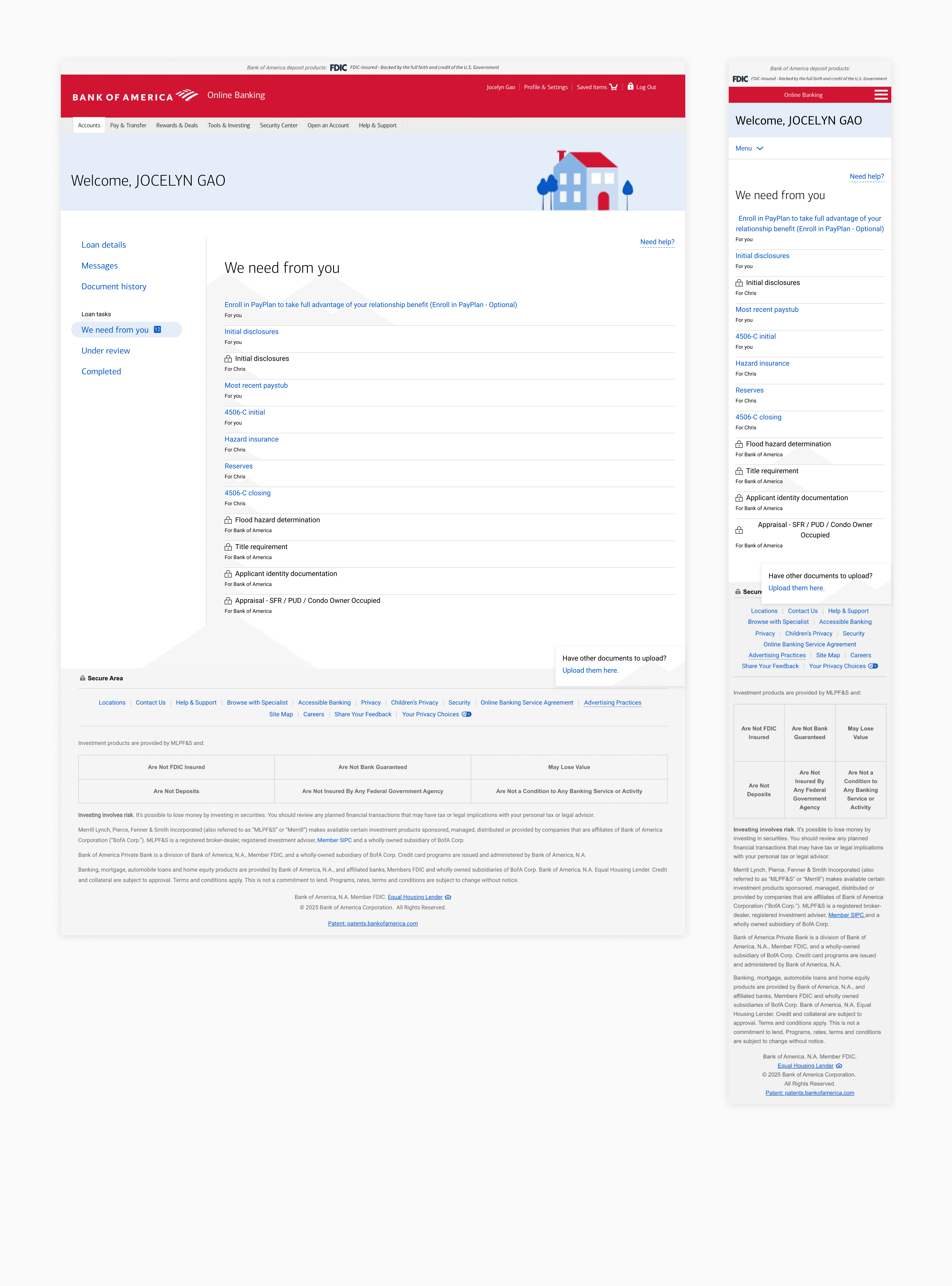
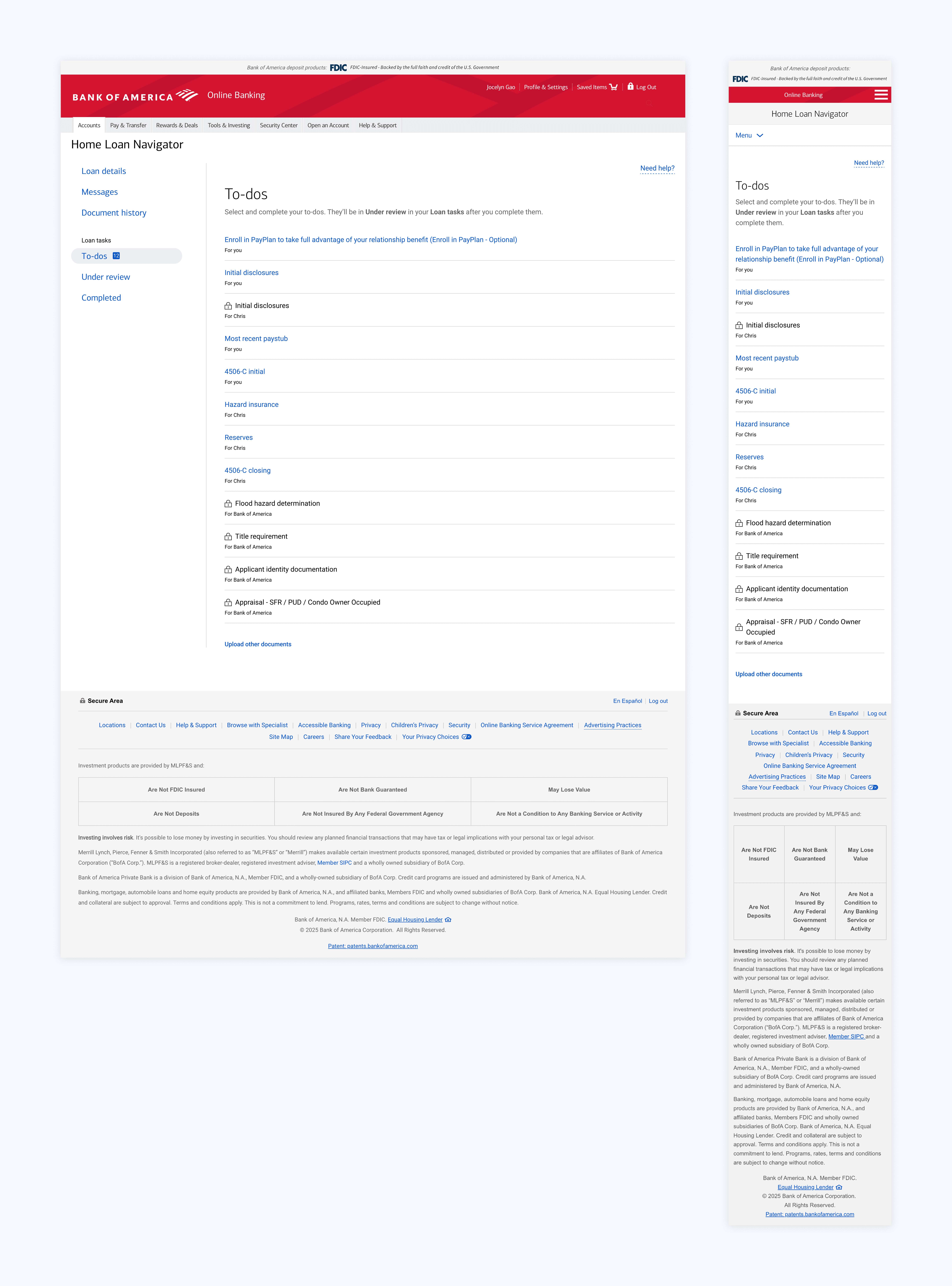
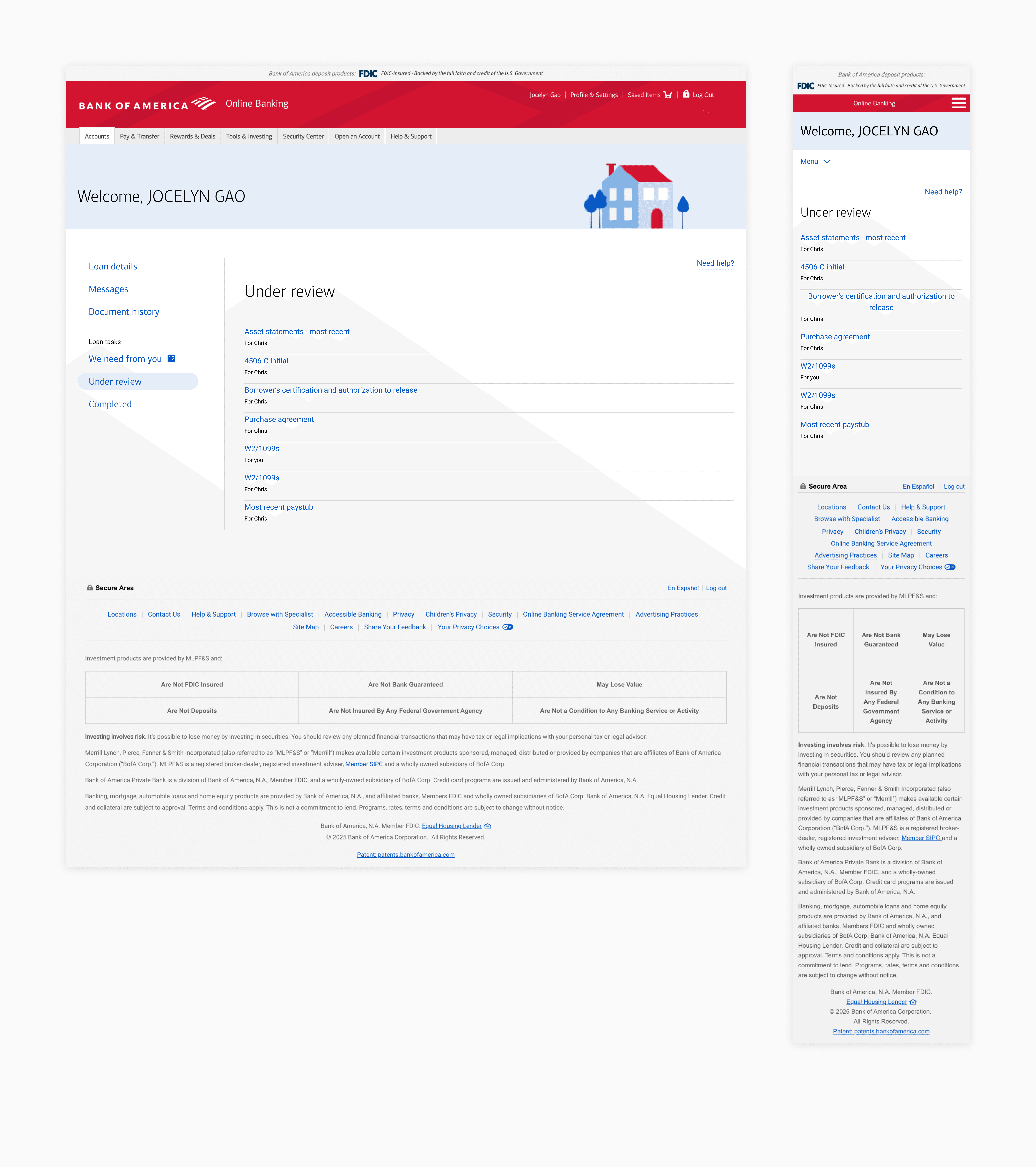
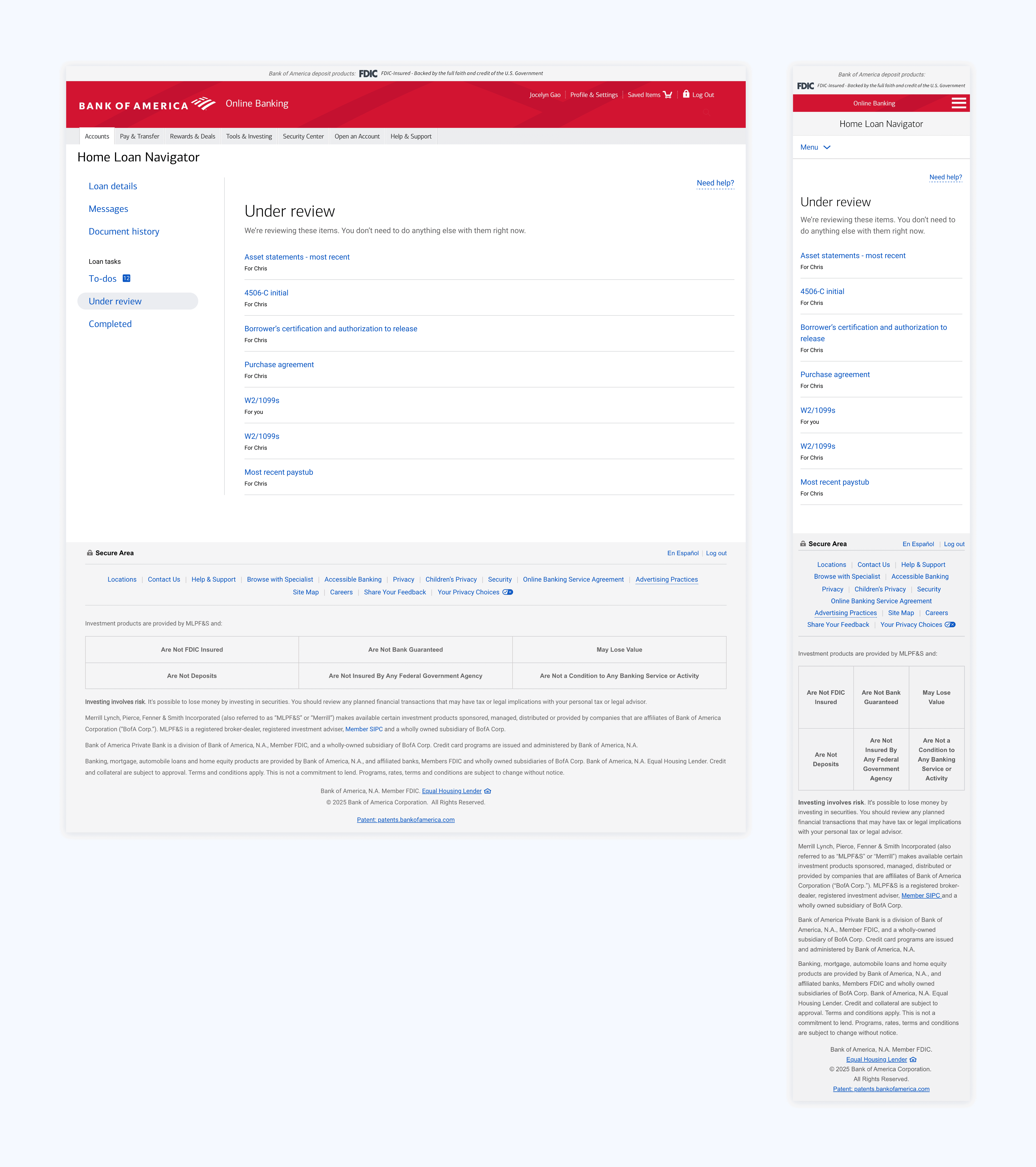
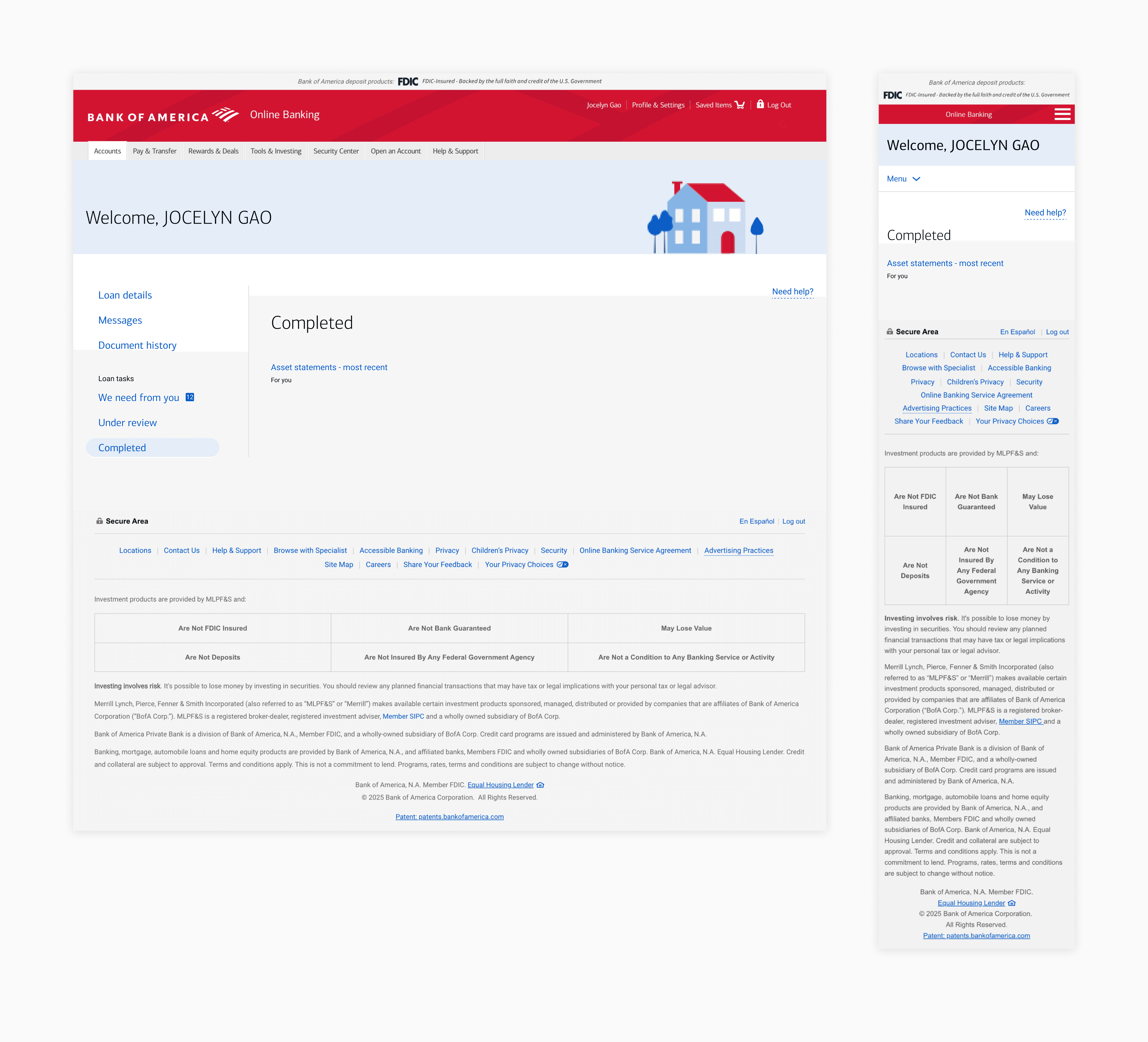
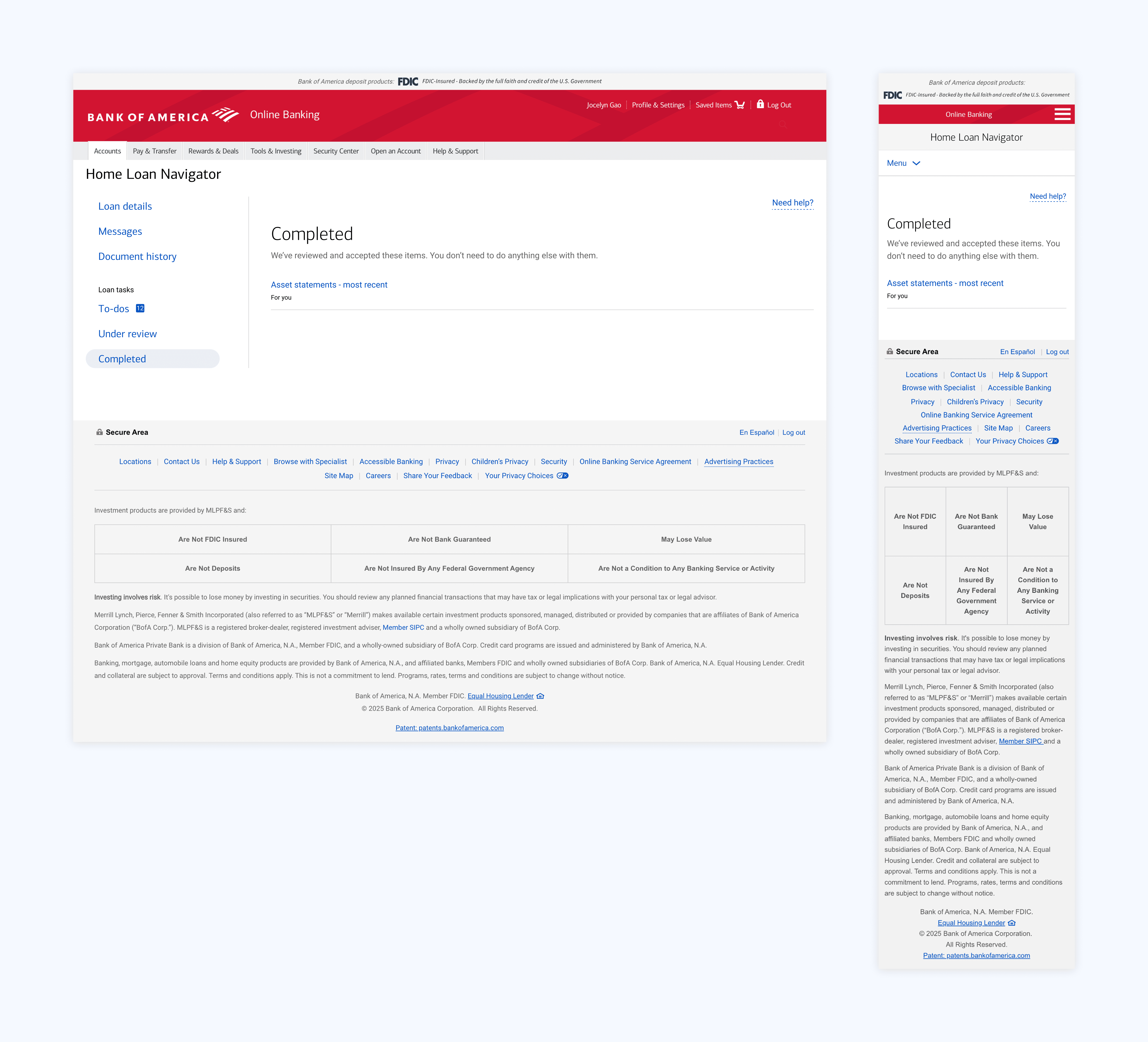
Note: only a sample of visuals are recreated due to BofA exporting restrictions.
I stayed closely connected with product and engineering throughout development, meeting weekly to resolve questions and ensure design intent carried through implementation. I visually QA'd all pages and created a streamlined defect log that allowed the team to filter and prioritize issues by page, defect type, breakpoint, component, and severity.
I set up regular working sessions with front-end developers to troubleshoot edge cases and production issues, resolving them quickly and helping ensure a smooth, high-quality launch.
The enhanced Home Loan Navigator launched in November 2025, giving clients real-time visibility into their loan progress and document status, reducing confusion and supporting greater self-service.
Our project also gained organizational recognition: I presented the enhancements at Bank of America’s Digital All-Hands to 380+ colleagues and leaders, marking one of the first times XD, rather than Digital Product, presented a body of work. Afterwards, the Head of XD personally congratulated me for the clarity and impact of the work.